

Rain Gardens
A rain garden is a thoughtfully designed planting area that captures and absorbs rainwater from roofs, driveways, patios, and other hard surfaces. Instead of allowing stormwater to rush across the landscape and carry pollutants into local waterways, a rain garden slows the flow, filters runoff through healthy soil and plant roots, and allows water to gradually soak into the ground.
For homeowners in Chesapeake and throughout Southeast Virginia, rain gardens are a practical way to manage stormwater while creating beautiful habitat for birds, butterflies, pollinators, and other wildlife.
How Does a Rain Garden Work?
A rain garden works with the natural movement of water through the landscape.
Rainfall → Runoff → Rain Garden → Soil & Plant Roots → Infiltration
Water from a roof, downspout, driveway, or other impervious surface can be directed toward the rain garden. The shallow basin temporarily holds the runoff, slowing its movement and allowing sediment and pollutants to settle. Water then filters through the soil and gradually infiltrates into the ground.
Plants play an important role throughout this process. Their roots help create pathways through the soil, take up water and nutrients, and contribute organic matter as they grow and die back.
Why Choose a Rain Garden?
A rain garden can turn a stormwater problem into an ecological opportunity.
Reduce Stormwater Runoff
Rain gardens capture runoff before it rushes across lawns, driveways, and other hard surfaces. Slowing this water can reduce the volume and speed of runoff leaving your property.
Help Prevent Erosion
Fast-moving water can wash away soil and damage planting beds and lawn areas. A rain garden helps slow and disperse runoff before it causes erosion.
Filter Pollutants
Stormwater can pick up sediment, nutrients, and other pollutants as it moves across developed surfaces. Rain gardens provide an opportunity for water to be filtered through soil and plant roots before continuing through the watershed.
Support the Chesapeake Bay
The Chesapeake Bay is connected to an enormous watershed, and the water leaving individual properties contributes to the health of local streams and rivers. Managing stormwater where it falls is one way homeowners can help reduce the impacts of runoff on the larger watershed.
Create Wildlife Habitat
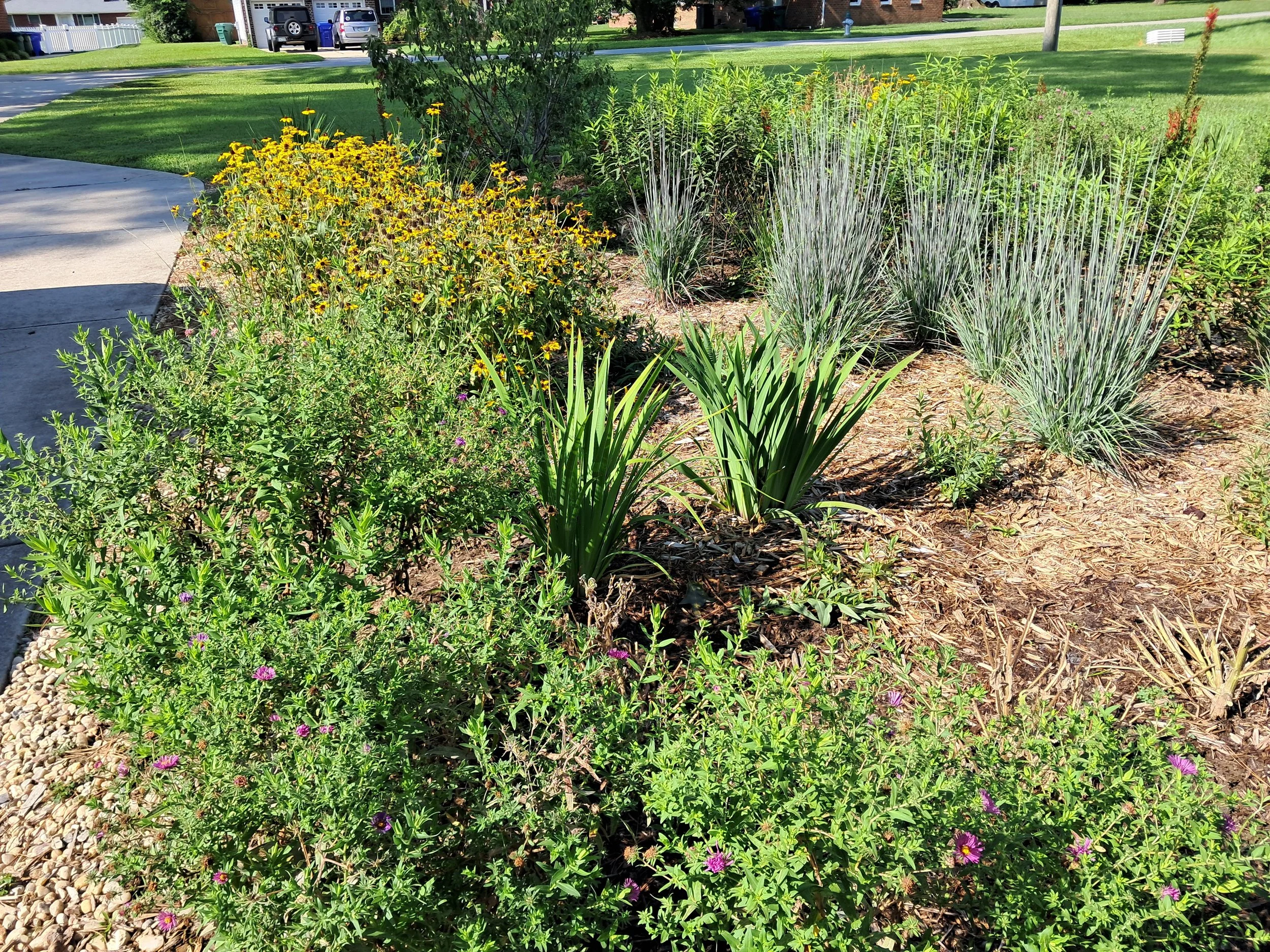
A rain garden doesn't have to look like a drainage feature. With the right native plants, it can become a beautiful habitat garden that provides nectar, seeds, shelter, and host plants for wildlife.
Add Beauty to Your Landscape
Rain gardens can incorporate flowering perennials, grasses, shrubs, and other native plants to create seasonal color, texture, and interest. Instead of hiding a drainage problem, a rain garden can turn it into one of the most ecologically valuable areas of your yard.
Native Plants for Rain Gardens
The plants in a rain garden are an important part of its function and ecological value.
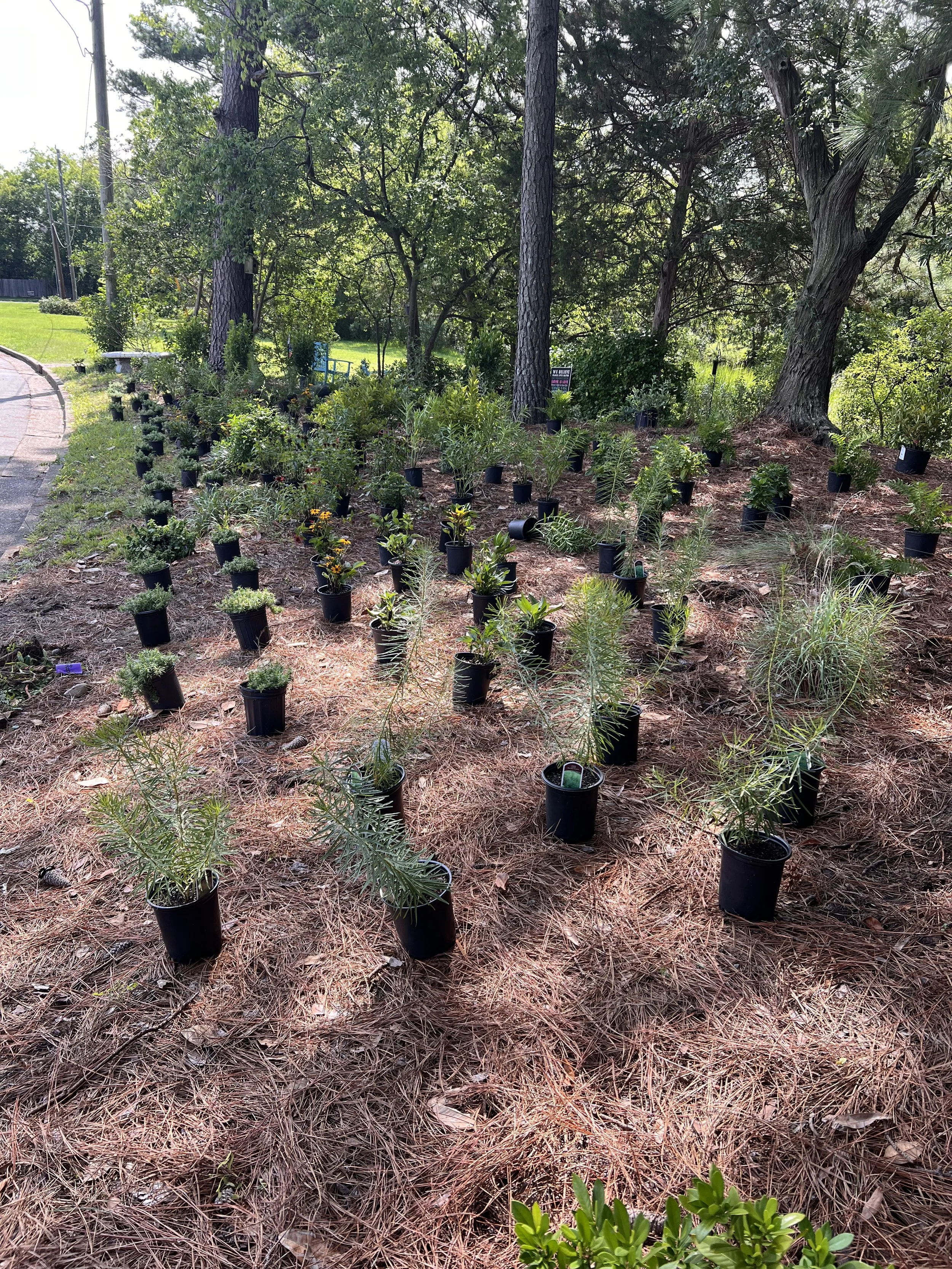
We select plants based on the specific conditions of the site, including how wet or dry different areas become, the amount of sunlight available, soil conditions, and the overall design of the landscape.
Depending on the site, native rain garden plants may include species such as:
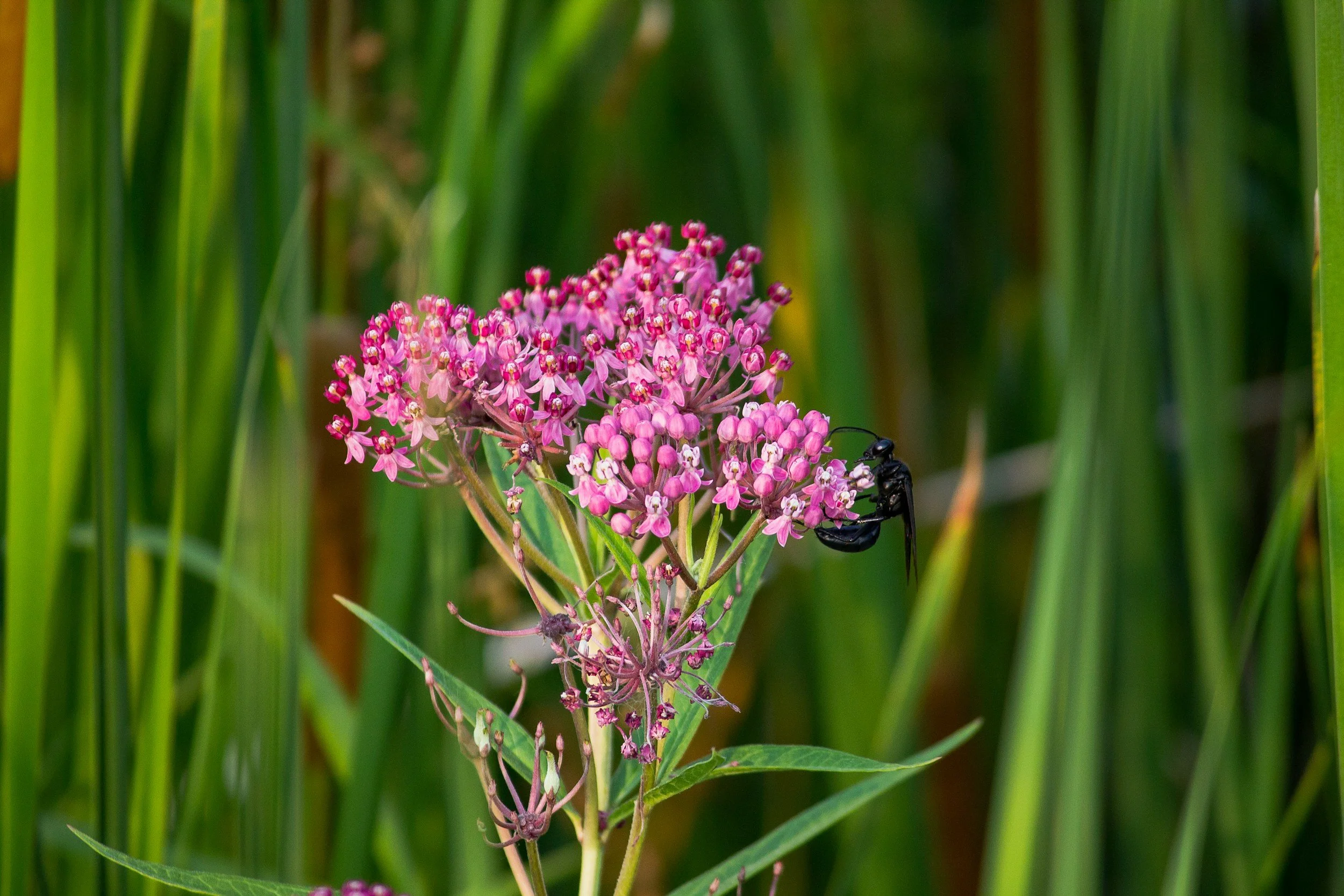
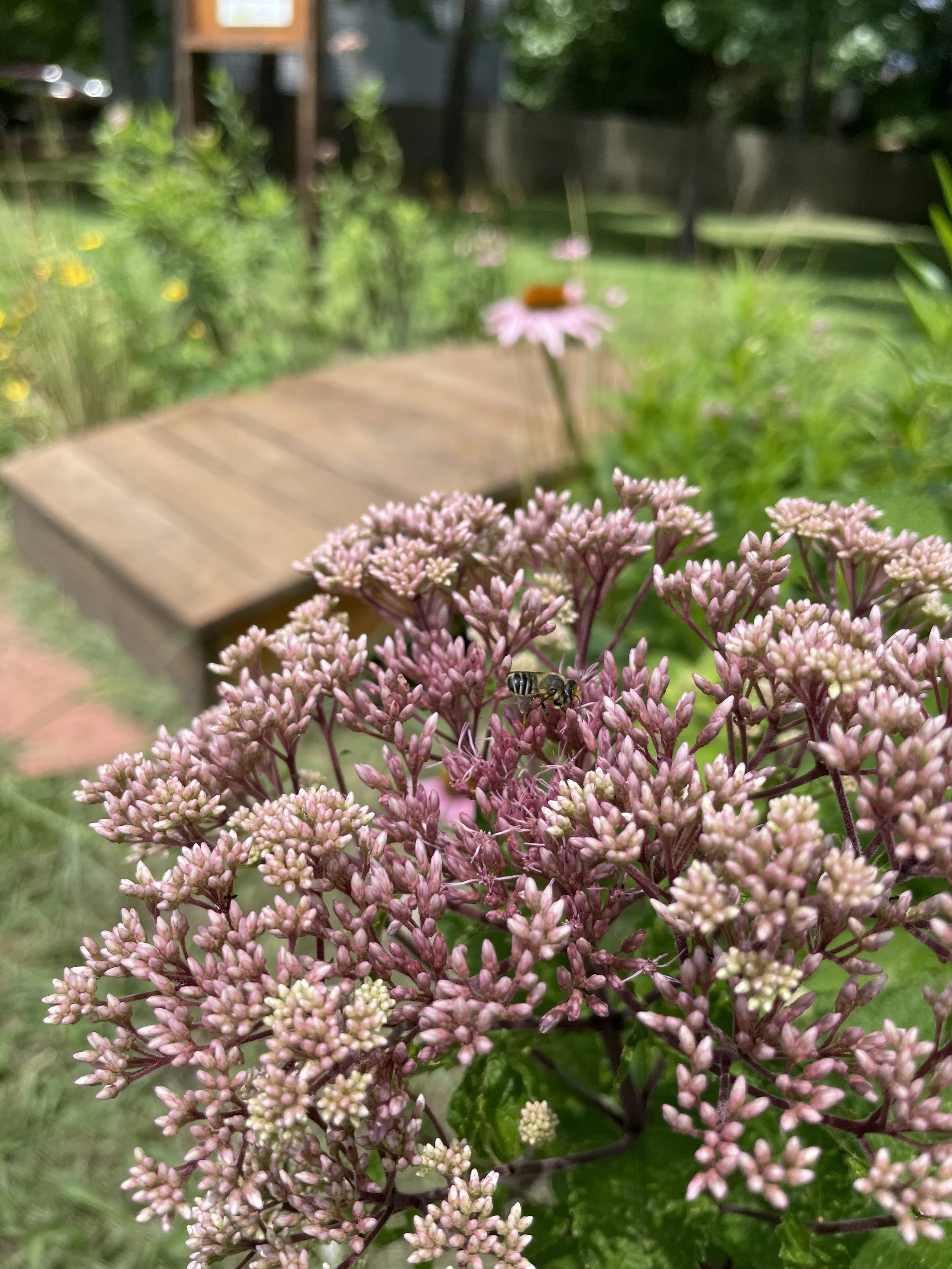
Swamp milkweed (photo to the right/below on mobile)
Cardinal flower
Blue flag iris
Great blue lobelia
Golden ragwort
Black-eyed Susan
Native asters
Planting a variety of species creates layers of vegetation and provides resources for wildlife throughout the growing season.
The goal isn't simply to find plants that tolerate wet conditions. We create plant communities that can handle the natural cycles of the site while contributing to a healthy, beautiful ecosystem.
Rain Garden Maintenance
Rain gardens are designed to be low-maintenance, but no landscape is completely maintenance-free.
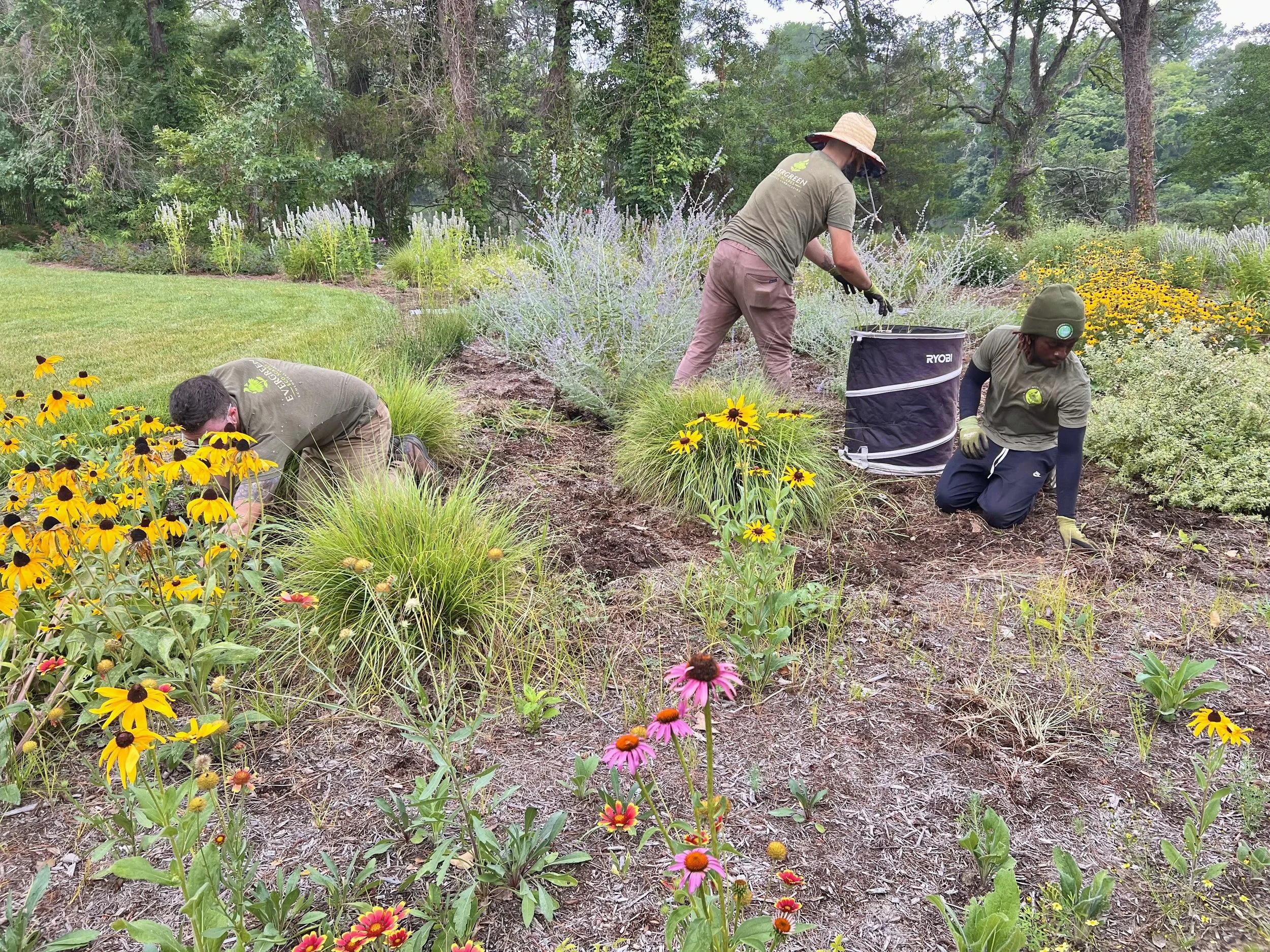
During establishment, new plants may need supplemental watering, particularly during periods of hot or dry weather. Once established, maintenance typically includes seasonal weeding, pruning, managing unwanted plants, and maintaining healthy plant coverage.
Using well-adapted native plants can reduce the need for intensive maintenance while providing greater ecological value than a conventional ornamental planting.
Is a Rain Garden Right for Your Yard?
Rain gardens can be an excellent solution for many Chesapeake-area properties, but they aren't right for every site.
Your property may be a good candidate if:
Water collects in a particular area after heavy rain.
A downspout sends water across your lawn or toward another part of the property.
You experience erosion caused by concentrated runoff.
You have a low-lying area that could become a planted landscape.
You want to reduce stormwater runoff while increasing habitat.
You are looking for a natural alternative to conventional drainage solutions.
Before designing a rain garden, we consider the property's drainage patterns, soil, slope, sunlight, available space, and surrounding structures. These factors help determine whether a rain garden is appropriate and how it should be designed.
If your site isn't suitable for a rain garden, there may be another ecological stormwater solution that better fits your property..
Not sure if a rain garden would work in your yard?
We can evaluate your landscape and help determine whether a rain garden is the right solution or recommend another ecological approach that better fits your property.
Frequently Asked Questions
-
No. Rain gardens are designed to temporarily hold stormwater and allow it to gradually infiltrate into the soil. A properly designed rain garden should not function as a permanent pond.
-
A properly designed rain garden should drain relatively quickly after rainfall. Because it is not intended to hold standing water for extended periods, it is different from a permanent water feature.
-
Rain garden placement requires careful consideration of structures, foundations, utilities, slopes, and drainage. We evaluate these conditions before determining an appropriate location.
-
A rain garden can technically contain many types of plants, but native plants are particularly well suited to ecological rain gardens. They can provide important food and habitat for local wildlife while adapting to the site's natural conditions.
-
Sometimes. The effectiveness of a rain garden depends on the source and volume of runoff, soil conditions, slope, available space, and other site factors. Some drainage problems require a different approach.
-
No. A rain garden is one of many possible approaches to stormwater management. A site assessment can help determine whether it is appropriate for your property.
Turn Runoff Into Habitat
A drainage problem doesn't always have to be solved with pipes, concrete, or conventional drainage systems.
With thoughtful ecological design, stormwater can become an opportunity to create a beautiful landscape that supports wildlife, improves the function of your property, and contributes to a healthier watershed.
Interested in a rain garden for your Chesapeake-area property?
Contact us to explore an ecological stormwater solution designed specifically for your landscape.