
What Is Stormwater Management?
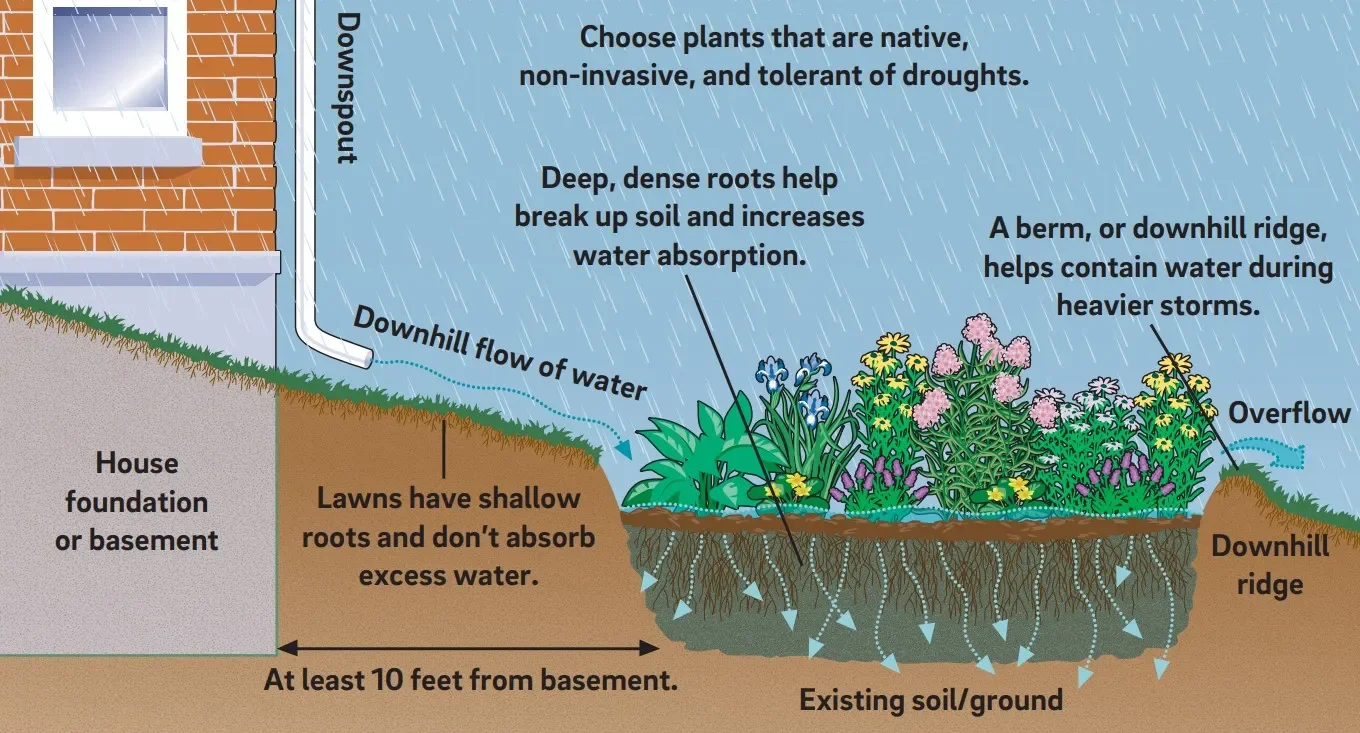
Stormwater management is the practice of controlling where rainwater moves and collects on your property.
After a heavy rain, you may notice water pooling in undesirable areas, collecting near foundations, washing across the landscape, or remaining in areas where it does not properly drain within 24–48 hours. This is where stormwater landscaping can help.
We design landscapes so water moves with intention—directing it toward areas where it can slow down, soak into the soil, or be put to use within the landscape.
Depending on the property, this may include rain gardens that capture and filter runoff, vegetated swales and dry creek beds that guide water from one area to another, grading that improves drainage, or rain barrels that capture water for later use.
Rather than simply trying to get rainwater off the property as quickly as possible, we look for ways to work with water as a resource while helping protect your home and landscape.
Stormwater Management Systems
-
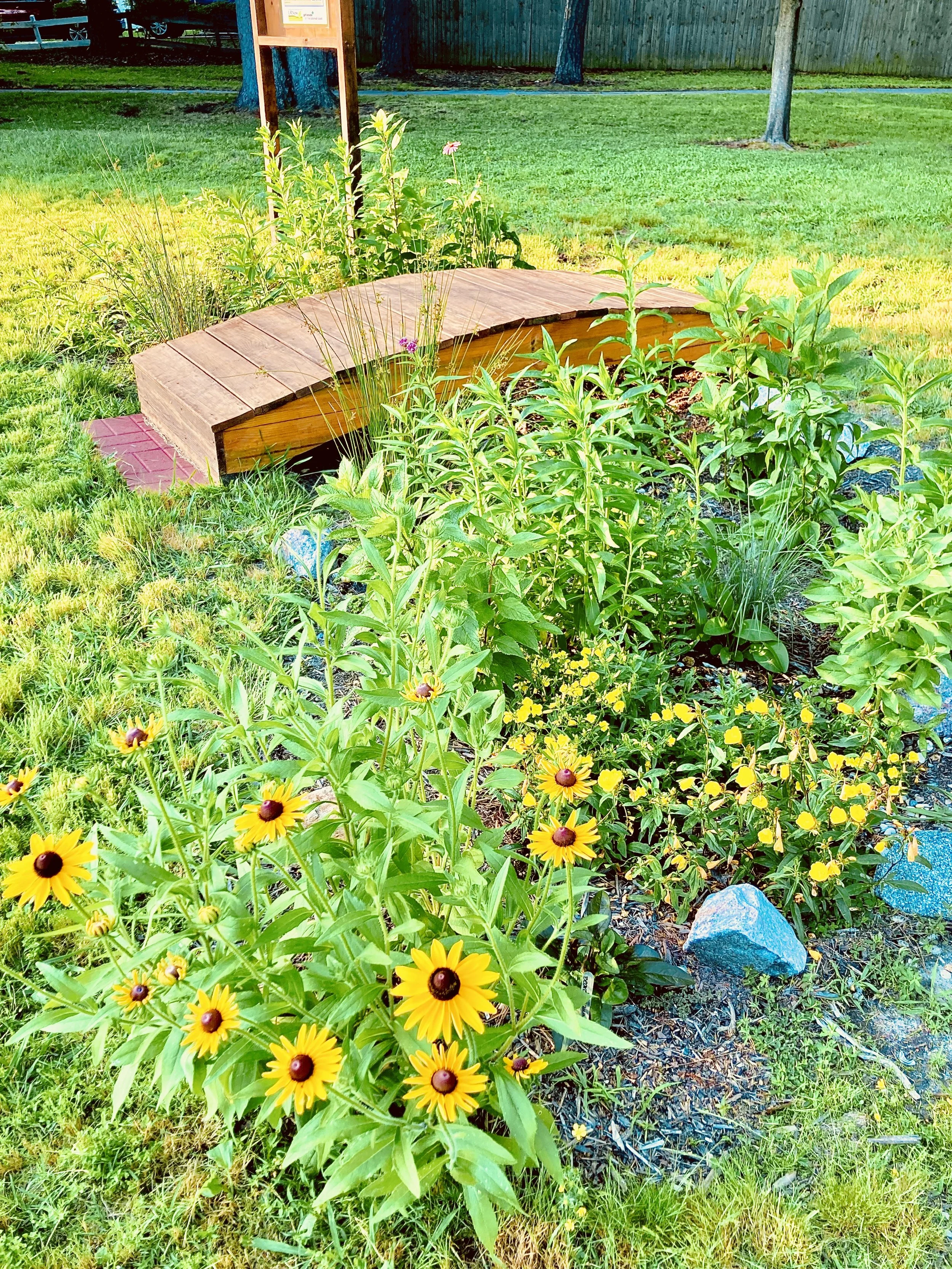
Rain Gardens
Shallow planted depressions designed to temporarily collect stormwater, allowing it to slowly soak into the soil while filtering runoff through plants, roots, and soil.
-
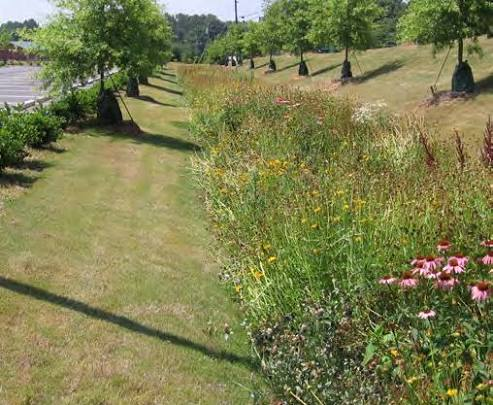
Vegetated Swales
Broad, gently sloped channels planted with grasses, sedges, and other vegetation that slow and guide water across the landscape while encouraging infiltration.
-
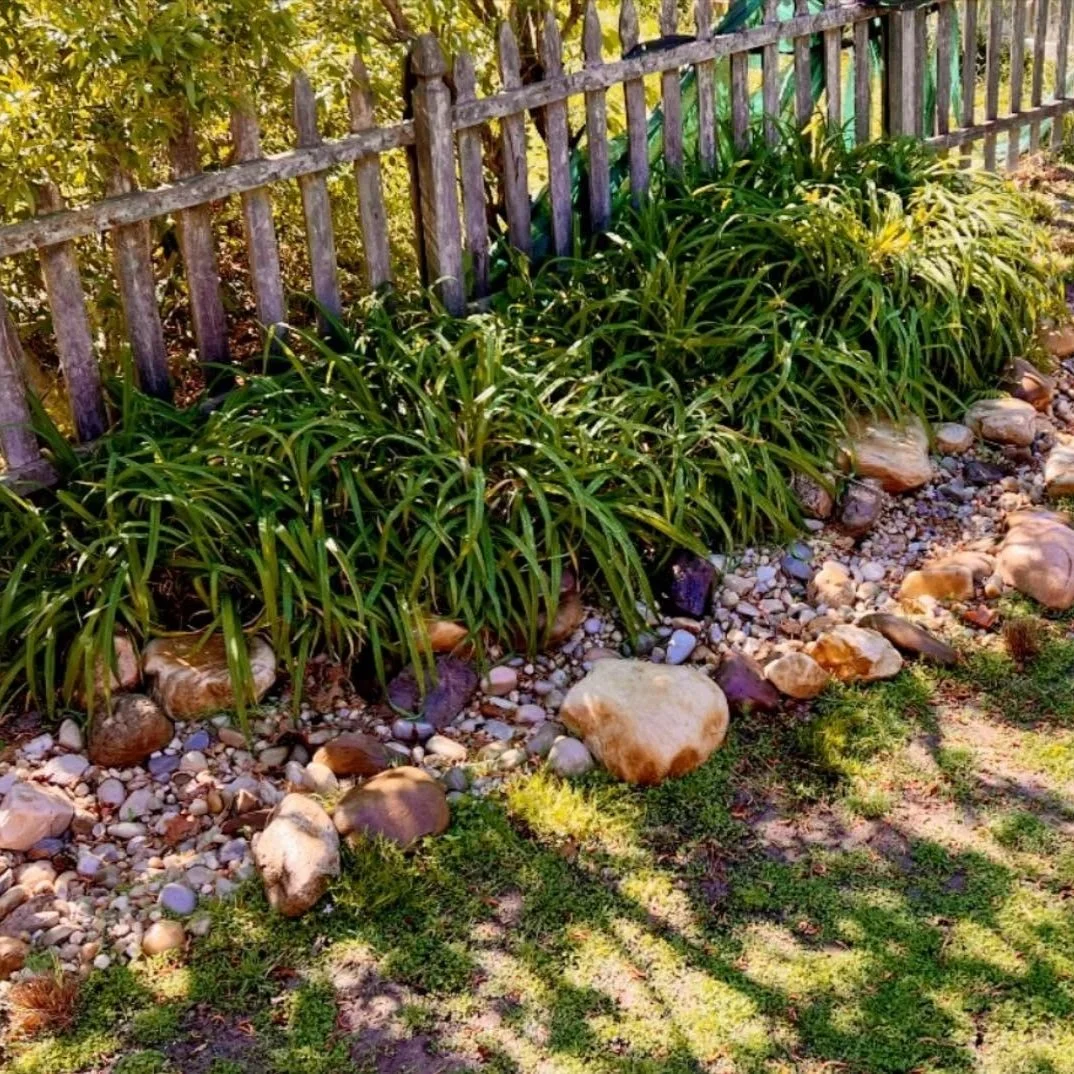
Dry Creek Beds
Stone-lined channels that direct water through the landscape during rain events while remaining dry most of the time. They can be both functional and a beautiful landscape feature.
-
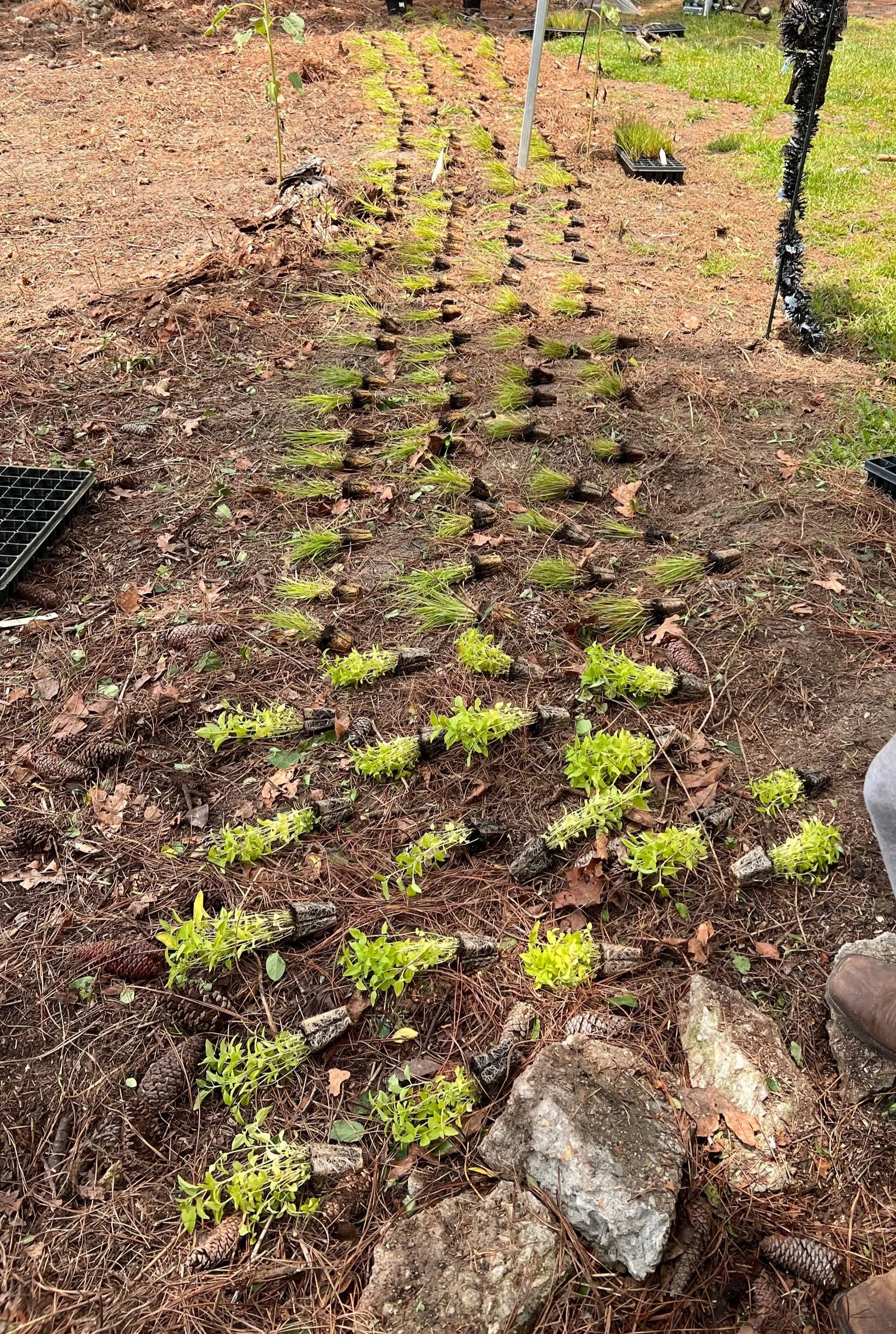
Riparian & Shoreline Buffers
Planted buffers along waterways, ponds, ditches, or shorelines that help slow runoff, stabilize soil, capture sediment, and filter pollutants before they reach the water.
Other Types Of Stormwater Management solutions

Grading & Drainage Correction
Thoughtful reshaping of the land to redirect water away from foundations, structures, and persistently wet areas toward places where it can safely infiltrate or be managed.
Infiltration Areas
Features such as infiltration trenches or gravel-filled basins that temporarily hold runoff below the surface and allow it to gradually absorb into surrounding soil.
Rainwater Capture
Rain barrels, cisterns, and other systems that collect roof runoff so it can be stored and reused for watering gardens.
Riparian & Shoreline Buffers
Planted buffers along waterways, ponds, ditches, or shorelines that help slow runoff, stabilize soil, capture sediment, and filter pollutants before they reach the water.
Downspout Management
Redirecting roof runoff away from foundations and into gardens, rain gardens, swales, infiltration areas, or other appropriate parts of the landscape.
Permeable Surfaces
Gravel paths, stepping stones, permeable patios, and other surfaces that allow rainfall to infiltrate rather than creating additional runoff.